


Losing a tooth can affect more than the appearance of your smile. Missing teeth can make it harder to chew comfortably, affect the way your remaining teeth come together, and contribute to changes in your jawbone over time.
Fortunately, you have options when it comes to replacing missing teeth. Dental implants are one of the most comprehensive solutions available, but they aren't necessarily the right choice for every patient.
So, when should you consider dental implants? The answer depends on factors such as how many teeth you're missing, the condition of your remaining teeth and gums, your jawbone, your overall health, and your personal goals.
At Comprehensive Dentistry, with locations in Ypsilanti and Saline, MI, our team provides implant dentistry along with a wide range of preventive, restorative, cosmetic, and orthodontic services. This comprehensive approach allows us to evaluate your individual needs and discuss the treatment options that may be appropriate for you.
What Are Dental Implants?
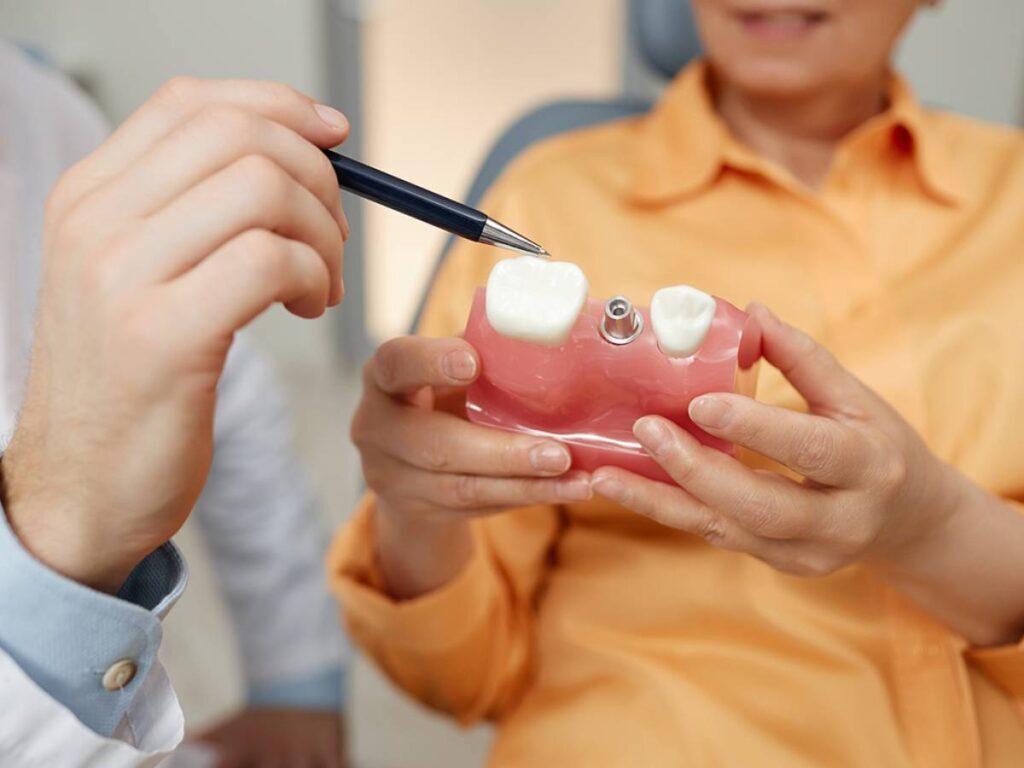 A dental implant is a small post that is surgically placed into the jawbone to replace the root of a missing tooth. After the implant has healed and integrated with the surrounding bone, it can support a dental crown, bridge, or other restoration.
Unlike a traditional removable denture, an implant is anchored in the jaw. And unlike a traditional dental bridge, an implant-supported tooth doesn't have to rely on neighboring teeth for support.
Dental implants can be used to:
- Replace a single missing tooth
- Replace multiple missing teeth
- Support an implant-supported bridge
- Help stabilize certain types of dentures
- Restore function after extensive tooth loss
Your dentist can determine which type of implant restoration is appropriate based on your specific needs.
When is a Dental Implant Recommended?
Our team at Comprehensive Dentistry may recommend exploring implant treatment if:
You're Missing a Single Tooth
If you've lost one tooth because of decay, an injury, gum disease, or another cause, a dental implant with a crown may be an option.
One potential advantage of an implant-supported crown is that the replacement tooth is supported by the implant itself rather than by the neighboring teeth.
A traditional bridge, by comparison, uses adjacent teeth as part of the support for the replacement tooth. If those neighboring teeth are healthy, your dentist may discuss whether an implant would be an appropriate alternative.
You're Missing Multiple Teeth
Dental implants can also be used to replace multiple missing teeth.
Depending on the location and number of missing teeth, implants may support a bridge or another type of restoration. This can provide a fixed option for replacing several missing teeth without necessarily requiring an individual implant for every tooth.
Your dentist will evaluate your remaining teeth, gums, jawbone, and overall oral health when determining which approach makes sense.
You Want a More Stable Tooth Replacement
Removable dentures can be an effective way to replace multiple missing teeth. However, some patients are interested in a solution that provides additional stability.
Depending on your circumstances, dental implants may be used to support a restoration rather than relying entirely on the gums for support.
During an implant consultation at Comprehensive Dentistry, your dentist will walk you through implant-supported options and determine if they are appropriate for your situation.
When Might a Dental Bridge Be a Better Option?
Dental implants aren't automatically the best choice for every missing tooth.
A traditional dental bridge may be appropriate for some patients. Bridges can replace a missing tooth without requiring surgical implant placement and may be especially practical when the teeth adjacent to the missing space already need crowns or significant restorative treatment.
A bridge may also appeal to patients who prefer to avoid implant surgery.
The decision between an implant and a bridge depends on factors such as the health of your surrounding teeth, the location of the missing tooth, your oral health, treatment timeline, and personal preferences.
Comprehensive Dentistry provides restorative dental services as part of its comprehensive approach to care, allowing your dentist to consider multiple solutions rather than taking a one-size-fits-all approach.
When Might a Denture Be a Better Option?
Patients who are missing many or all of their teeth may have several options, including removable dentures and implant-supported solutions.
Traditional dentures can replace an entire arch of missing teeth without requiring implant placement. They are removable and can be an appropriate solution depending on your oral health, anatomy, goals, and preferences.
For patients who want additional stability, implant-supported dentures may be worth discussing. Your dentist can help you compare the benefits and considerations of each approach so you can make an informed decision about your smile.
Preserving a Natural Tooth
An implant is designed to replace a missing tooth. That means your dentist will first determine whether a damaged or diseased natural tooth can be preserved.
Depending on the condition of the tooth, restorative treatments such as a filling, crown, or root canal may be able to restore it. Preserving your natural tooth may be an option when the tooth can be predictably treated and maintained.
Comprehensive Dentistry provides a broad range of restorative and specialized dental services, allowing your care team to consider tooth-preserving treatment when appropriate rather than automatically moving to extraction and replacement. The practice also provides root canal therapy and oral surgery in-house, including through visiting specialists at the Saline location for more complex procedures.
Do You Need Enough Bone for a Dental Implant?
Because an implant is placed into the jawbone, having sufficient bone to support the implant is an important part of treatment planning.
Bone loss can occur after a tooth has been missing for some time. However, having bone loss doesn't necessarily mean dental implants are off the table.
Your dentist can use diagnostic imaging to evaluate your jawbone and determine whether you have enough bone to support an implant or whether additional treatment may be needed first.
Comprehensive Dentistry's team includes providers with advanced training in surgical implant placement, and the practice offers complex implant procedures as part of its comprehensive care model.
What Are the Benefits of Dental Implants?
For appropriate candidates, dental implants can offer several potential benefits:
- Stability: An implant is anchored in the jawbone to provide a foundation for a replacement tooth.
- Natural appearance: A custom restoration can be designed to blend with your surrounding teeth.
- Function: Replacing a missing tooth can help restore chewing and speaking function.
- Versatility: Implants can support crowns, bridges, and other restorations.
- Jawbone support: Implant placement can help maintain bone in the area of a missing tooth.
- Long-term restoration: With appropriate care and maintenance, dental implants can provide a durable tooth-replacement option.
Your dentist can discuss the potential benefits and limitations of implant treatment based on your needs.
Is It Best to Replace a Missing Tooth Right Away?
It's a good idea to talk with your dentist after losing a tooth rather than simply leaving the space untreated. Over time, missing teeth can contribute to shifting of neighboring teeth and changes in the jawbone. Addressing tooth loss sooner gives your dentist an opportunity to evaluate the area and discuss your options before additional changes occur.
That doesn't necessarily mean you need to receive an implant immediately. At your restorative consultation, your dentist can help you understand your choices and determine the appropriate timing for treatment.
Why a Comprehensive Treatment Approach Matters
Replacing a missing tooth isn't simply a matter of choosing between an implant and a bridge. Your dentist needs to consider your overall oral health and how the replacement will fit into your long-term treatment plan.
At Comprehensive Dentistry, the goal is to provide patients with complete care in a comfortable, patient-centered environment. The practice offers preventive, restorative, cosmetic, pediatric, implant, and Invisalign® services, with both the Ypsilanti and Saline locations designed to provide comprehensive care in one place.
Dr. Colleen Bullard founded Comprehensive Dentistry in 2006, and her advanced training includes surgical implant placement, oral surgery, root canals, and clear aligner therapy. Our practice has since grown into a multi-doctor team while maintaining its focus on personalized care.
Here, your treatment plan will be based on your needs and backed by trusted dental expertise.
Dental Implants in Ypsilanti and Saline, MI
If you're missing one or more teeth, dental implants may provide a stable, long-term way to restore your smile. However, a bridge, denture, restorative treatment, or another option may be more appropriate depending on your circumstances.The first step is an evaluation. Your dentist can examine your teeth and gums, evaluate your jawbone, discuss your goals, and explain your available treatment options.
Comprehensive Dentistry offers implant dentistry at both its Ypsilanti and Saline, MI locations, with advanced technology and a comprehensive approach designed to keep more of your dental care in one place. We currently offer complimentary implant consultations for patients interested in learning whether implants may be appropriate for them.
Considering dental implants in Ypsilanti or Saline, MI? Contact Comprehensive Dentistry to schedule an implant consultation to learn more about what implants can do for your smile!


